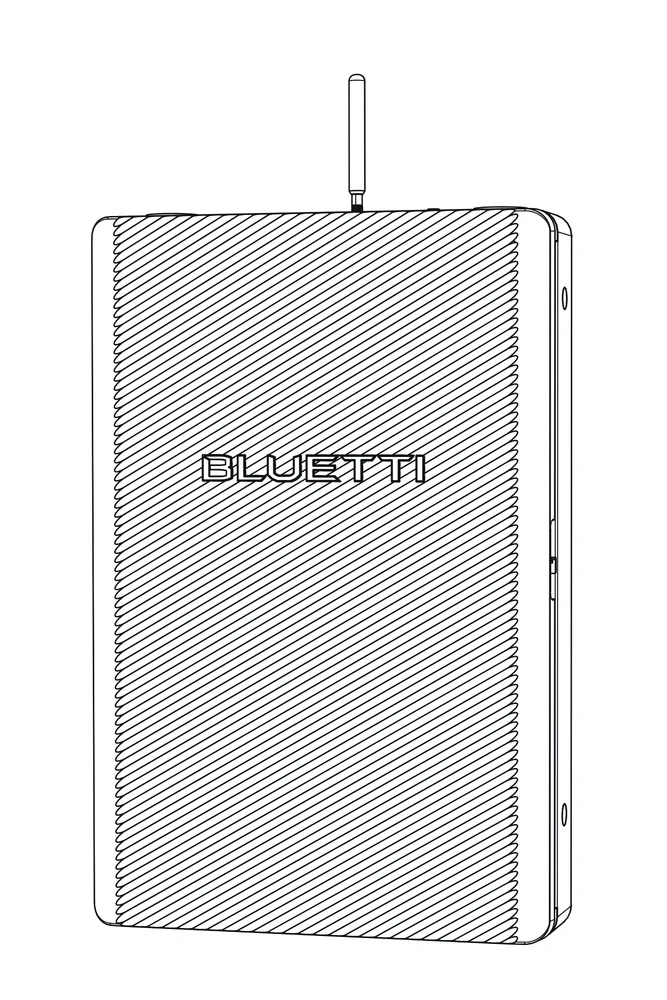
Battery pack claim; verification pending. A manufacturer claim, not a listing or certificate. Printed as "Certifications: CEC / CB / CE / FCC / ICES / IP65 / PSE / RCM / UKCA / UL1973 / UL9540A / UN38.3-2022" in the B500 Specifications block of BLUETTI's own Australian store page for the B500 expansion battery, captured on September 29, 2026 (the page already cited on this record; its product data carries the SKU B500-AU-WH-BL-SPFAU). "CEC" in that list is not the California Energy Commission listing. No issuer, certificate or report number is printed; the issuer's record was not checked. The page does not say whether the claim covers the cell, the module or the battery.
Battery pack claim; verification pending. A manufacturer claim, not a listing or certificate. Printed as "Certifications: CEC / CB / CE / FCC / ICES / IP65 / PSE / RCM / UKCA / UL1973 / UL9540A / UN38.3-2022" in the B500 Specifications block of BLUETTI's own Australian store page for the B500 expansion battery, captured on September 29, 2026 (the page already cited on this record; its product data carries the SKU B500-AU-WH-BL-SPFAU). "CEC" in that list is not the California Energy Commission listing. No issuer, certificate or report number is printed; the issuer's record was not checked. UL 9540A is a test method for thermal runaway fire propagation, not a certification; the page does not say whether the test was run on the cell, the module or the battery, and no test report is printed.
Battery pack claim; verification pending. A manufacturer claim, not a listing or certificate. Printed as "Battery Certificates: CB / CE / FCC / ICES / IP65 / PSE / RCM / UKCA / UL1973 / UL9540A / UN38,3-2022" in the "B500 (General)" part of the Specifications block of BLUETTI's own European store page for the EP760 + B500 kits, and as "Certifications: UL9540A, UL1973, UKCA, RCM, PSE, IP65, ICES, FCC, CE, CB" in the "B500" part of the Specifications block of its EP600 + B500 page (which also sells the B500 alone, SKU B500-EU-WH-BL-SPFEU), both captured on September 29, 2026 and already cited on this record. No issuer, certificate or report number is printed; the issuer's record was not checked. The pages do not say whether the claim covers the cell, the module or the battery.
Battery pack claim; verification pending. A manufacturer claim, not a listing or certificate. Printed as "Battery Certificates: CB / CE / FCC / ICES / IP65 / PSE / RCM / UKCA / UL1973 / UL9540A / UN38,3-2022" in the "B500 (General)" part of the Specifications block of BLUETTI's own European store page for the EP760 + B500 kits, and as "Certifications: UL9540A, UL1973, UKCA, RCM, PSE, IP65, ICES, FCC, CE, CB" in the "B500" part of the Specifications block of its EP600 + B500 page (which also sells the B500 alone, SKU B500-EU-WH-BL-SPFEU), both captured on September 29, 2026 and already cited on this record. No issuer, certificate or report number is printed; the issuer's record was not checked. UL 9540A is a test method for thermal runaway fire propagation, not a certification; the pages do not say whether the test was run on the cell, the module or the battery, and no test report is printed.
Battery pack claim; verification pending. A manufacturer claim, not a listing or certificate. Printed as "Battery Certificates: CB / CE / FCC / ICES / IP65 / PSE / RCM / UKCA / UL1973 / UL9540A / UN38.3-2022" in the "B500 (General)" part of the Specifications block of BLUETTI's own UK store page for the EP760 + B500 kits (which also sells the B500 alone, SKU B500-2-01-SPFUK-00), captured on September 29, 2026 (the page already cited on this record). No issuer, certificate or report number is printed; the issuer's record was not checked. The page does not say whether the claim covers the cell, the module or the battery.
Battery pack claim; verification pending. A manufacturer claim, not a listing or certificate. Printed as "Battery Certificates: CB / CE / FCC / ICES / IP65 / PSE / RCM / UKCA / UL1973 / UL9540A / UN38.3-2022" in the "B500 (General)" part of the Specifications block of BLUETTI's own UK store page for the EP760 + B500 kits (which also sells the B500 alone, SKU B500-2-01-SPFUK-00), captured on September 29, 2026 (the page already cited on this record). No issuer, certificate or report number is printed; the issuer's record was not checked. UL 9540A is a test method for thermal runaway fire propagation, not a certification; the page does not say whether the test was run on the cell, the module or the battery, and no test report is printed.
Product / system scope unresolved. PDF p26: manufacturer FCC Part 15 statement. Radio/EMC compliance, not UL 9540 system certification. Issuer filing and current status not independently checked.
This manufacturer is listed as BLUETTI. Manufacturing entities, factories, cell origin and model-specific ownership relationships have not been audited.
Product certificates and company management certificates are tracked separately. No company management certificates have been reviewed for this manufacturer yet.
I purchased the Elite 300 with no great knowledge, but had just watched a few YouTube videos and I was as novice as they come. Purchased for short term backup thru a 6 circuit sub-panel I’ve had and used with generator for years. The Bluetti has worked well, I was able to order a cable from Amazon to plug 30a AC to the outlet that powers my transfer switch. I started with (2)200w solar panels and eventually got 4. One of the few negatives with Elite 300 is PV charging max is 60v. Things I like: portability although not light it can be moved without much trouble. The software offers lots of options with various UPS working modes. It’s very quite. Although it’s not officially expandable you can use 48v battery to charge it/extend battery significantly by simply using a fused xt60 to ring terminal cable. That’s what I just recently started doing with a 100aH battery. The Elite obviously cannot charge the big battery in this setup so I have a Victron 150/35 charge controller and a total 1200w solar currently. I’ve had the Elite powering my 6 essential circuits full time for a little over a week. The circuits use about 10kwH daily and I’ve managed to supply about half from solar and the Elite seems fairly efficient passing grid power direct to usage when needed. I haven’t explicitly tested efficiency, inverter draw or capacity but overall it all works well and seems close to specs I’ve seen from others. Overall for someone just getting into solar I think the Elite 300 is a good place to start and the unit is very versatile, so it can be repurposed in several potential use cases. My plan now is the add A Ruixu SunOn3.6 and more solar to at least run my essential circuits fully off solar. I’m sure I’ll then find a good place to utilize the Elite 300
Good for a medium sized roof system. Input up to 500 volts. I have 3. One is somewhat noisy. Main problem is every few weeks they can stop working. I had this problem with one so many times Bluetti replaced it. What will happen is you will get used to it running smooth, waking to it at 90%, then one day notice it is down to 60% and hasn't been charging or kicking on with sun at some point. Consequently, I have learned to check my 3 separate systems (each system Apex 300 and 6 b300k batteries) each morning. It rarely fails to start with the sun at this point. Fix is to disconnect and turn off everything then when switched on it will start. Remember, it takes 150 volts to start up, you have to wait. Overall, it seems reliable once it gets set up.
I engineered this system as a dedicated, standalone microgrid using the BLUETTI FridgePower module paired with a BC200 expansion battery pack to run my residential refrigerator and deep freezer. The system is continuously tied to both the solar array and the grid. To maintain the battery bank, I run a clean array of two 450W bifacial solar panels. The FridgePower unit has a built-in 20A limit and automatically clips any excess solar current, making parallel panel wiring simple and safe.
This hardware integration has performed exceptionally well, allowing me to consistently offset and save over 3 kWh of utility grid power per day.
From a software standpoint, the application is functional overall, but it does exhibit some quirky behavior. Occasionally, the app seems to ignore custom charging profile inputs and execute its own settings. However, this is easily bypassed by running the system on PV Priority Mode. I configured my low State-of-Charge (SOC) threshold to a flat 25%. If the FridgePower/BC200 battery bank drops below that 25% floor overnight or on low-solar days, the grid-tied system seamlessly steps in to charge the battery back to full, then immediately hands the load back off to the solar array the second the panels catch the sun.
The physical hardware itself has operated flawlessly over its first two months of continuous field testing. While I have not conducted a formal maximum load test yet, my real-world metrics show that the refrigerator and deep freezer pull an aggregate of 2.5 to 3 kWh daily. This continuous load profile leaves me with a highly stable 45% battery cushion on the FridgePower/BC200 by early morning before solar charging ramps back up.
Overall, I am highly satisfied with the FridgePower’s efficiency and hardware reliability. If you are seeking a reliable, grid-tied backup architecture for critical appliances and want to maximize solar priority in a compact footprint, this setup is highly recommended.
This unit has performed well powering a 50 amp Brinkley Z2680 5th wheel Rv. Its inverter has provided power to 2 A/C's units and everything else on my Rv. I cannot run both A/C's and the microwave, so i turn one off when using microwave. This unit is connected to 2 Vatrer 51.2 100AH Batteries using the battery expansion port and the SolarX cable .
We have managed to stay confortable while boodocking in 105 degree temperatures at Carlsbad Caverns, under those conditions I was worried the unit would reach its over temperature shutdown threshold, but i was able to run my Rv and fast charge using the Bluetti 50 amp cable from my WEN6800 dual fuel generator and using a 400 watt portable solar panel all at the same time.
I am using the Apex 300 50 amp plug to connect my Rv power cord directly to the unit, and using the Apex 300 30 amp plug to connect to the Inverter prep on my Rv , which supplies power to the Luving room Chill Cube air conditioner anp power plugs that keep our Starlink running while traveling, this works great where cell service is limited.
I have kept my 12 volt separate, which in my unit is refrigerator, lights , slide and hydraulic leveling system which runs using 300AH LiTime lithium battery.
Purchased Directly From Bluetti, but its not listed on the vendor list ????
I'm sure there is something i have forgotten about the performance of this unit, if I can update this review I will .
Works great, use it every day at my off grid property, bought March 2023.
Had to calibrate it after about a year, fully drain then charge with wall charger, repeat. Was giving a
false charge number.
I have 3 - 405 watt panels hooked to it so I get more on cloudy days here in Canada, max solar is 920 watts
They are not over the voltage max but sometimes it gives overcharge warning when it hits 100%, didn’t do that
the first couple of years. So now in the summer I unhook 1 panel.
Great Ease of Use in a Quality Small Solar Generator
The Bluetti Handsfree 2 form factor and 512wH and 700 W inverter makes for a convenient and capable small solar generator. Lightweight (about 10 lbs.) and easy to carry with built in handle. Can charge with grid power, solar, or car cigarette plug adapter. Bluetti app works smoothly and allows customization of charging, etc. I've appreciated the quick response of the enable DC and enable AC buttons. The 700w output lets me charge 2 USB-C and 2 USB-A devices plus a small 110v appliance.
I have a small, off-grid cabin that gets used as a greenhouse and a camping shelter. I needed a small amount of power all the time (greenhouse fans, Wi-Fi extender, CCTV camera, etc.) and wanted to be able to run more stuff when we're camping out there. Pricing a <1000w setup with charge controller, inverter, battery, etc. was going to be more than a power station, so I went with this.
I'm feeding it with 4x 220W panels (2S2P). They come in just under the limits (60v/20a) on the solar input at 59.2v/18.4A max. The unit is housed in a small wooden cabinet I built specifically for this purpose - it has a reasonable amount of airflow around it (and no back panel) and it doesn't seem to get very hot.
During "regular" use all summer, battery has rarely gone below 75% SoC. I have knocked it down to zero when trying to run a portable A/C unit overnight. There are a couple of features I specifically like:
- I have it set it to automatically turn back on and power loads after a complete power loss.
- I have it connected to Wi-Fi and I can see its data from offsite via the app.
- It's beefy enough to run my air compressor or the 1.5HP well pump I have connected to the rain water harvesting IBC totes.
I have not yet gone through a winter with it. Temps in the greenhouse can get down to freezing so I'm interested to see how it handles that. Summer temps are basically whatever ambient is (the fans recycle the air in there about every 3 minutes) and it has been fine in 100+ degree weather.
I wish there was a better expansion option for more storage.
Software/App have been fine so far.
Has worked well to provide backup and offset power bill
I have 3 apex 300's paralleled into a hub A1 to power my essentials during an outage. Since I also have solar panels I have this set up to run those essentials 24/7 until the batteries drain down to 20% then the hub a1 can pull from the grid to keep things running.
The software does have a weather alert to charge the batteries up if it gets a weather alert which is nice.
This has worked well for me over the past year or so and offset our power bill a bit.
Not cheap, but great form factor - highly recommended
I have an 18 cubic foot Frigidaire refrigerator. Measured actual usage over ten days was 12.78kWh (average 37.41 watts/hour). We lost power in the Palisades fire, so this is a backup for outages rather than a purchase I expect to save me money.
I am writing this after two months usage. I originally tried another solar generator for this purpose, but it wasn’t suitable.
Unit is not easy to move, so I would plan on keeping it in one place. Fake leather handle does not inspire confidence. See picture.
The form factor is brilliant! It fits very well on top of the refrigerator. Very unobtrusive. Power outlets are at the back. My refrigerator power cord did not reach and I needed to buy a two foot extension. 12 AWG recommended. Be sure to check yours before moving the refrigerator back!
One must buy a separate external panel to measure state of charge, current current usage, et cetera - $99 in August 2026. It attaches to the front of the refrigerator via a magnet. I don’t absolutely need this, since the BlueTTI app will give me this info, but it is more convenient. It turns off after a minute or so and is lost among the forest of restaurant menus when off.
I tested the unit and it powered the refrigerator for 23 hours and 45 minutes from a 90% state of charge. Meets my one-day goal. We will see how the solar charging works - in the Palisades fire, we did not get full sunlight, so I don’t know if that will be a realistic option for the next major blaze. The expansion battery should get another day, but it isn’t cheap.
Surge capacity is excellent, no drama when the compressor starts. I haven’t tried the coffee maker yet.
They advise keeping it at no more than 80% charge level. I will be using 95% since uptime is more important to me than long battery life. YMMV.
You don’t really need this - any number of cheaper 2kWh solar generators are more than equal to the task. But the real benefit of the FridgePower is its convenience - most people have room above their fridge to install it,and it comes with a bracket set to allow wall mounting. I don’t have the extra floor or counter space to keep a larger unit always attached. If you have a 4000 square foot ranch style house, it may not matter to you, but with a 900 square foot condo, it did to me.
Fans are noticeable when doing a recharge late at night, but usually not objectionable. YMMV.
No experience yet with a real sustained outage, or with solar recharging. We have had a couple of brief SCE maintenance outages and the FridgePower handled those completely unobtrusively. I think there was a beep on one.
Highly recommended. It fulfills the mission requirements almost perfectly so far.
Note: this is not a verified review because I don’t want to have to move the FridgePower to get a picture of the serial number! The pictures show it with the included legs - I had those on originally to check heat during operation, which wasn’t an issue. They are removed now. Dollar bill is to give a size reference for the optional control panel. The other unit in the picture is an EcoFlow Delta 1000 Air, which met my needs on paper, but wasn’t workable as an ongoing backup due to energy saving cutoffs.